
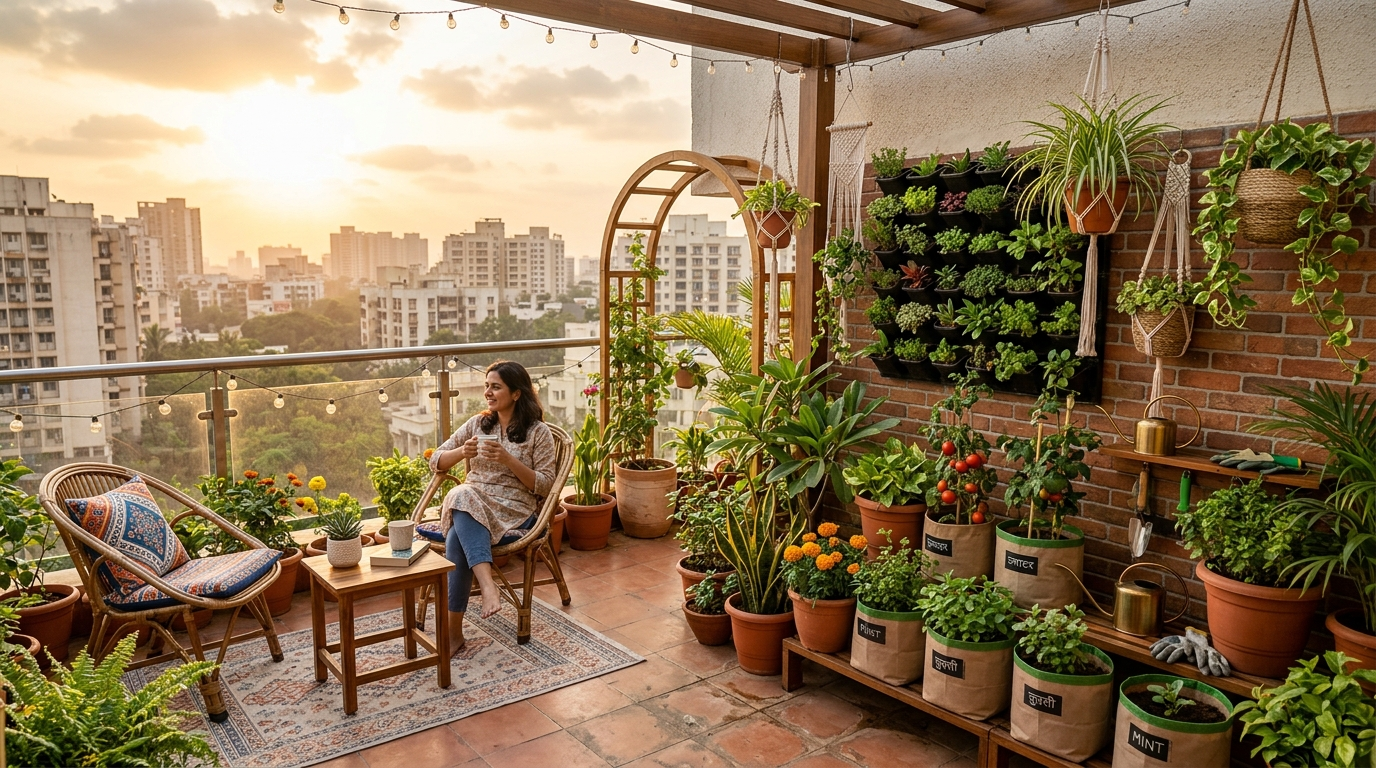
The terrace is one of the most underused spaces in Indian homes. Most rooftops sit empty, baking in the sun, while the families below dream of more greenery. A well-planned terrace garden can change that completely — turning hot, unused concrete into a cool, fragrant, productive oasis just steps from your bedroom.
This guide walks you through everything you need to plan, build, and enjoy a beautiful terrace garden, from waterproofing basics to plant selection to common mistakes to avoid.
Why a Terrace Garden Is Worth It
A rooftop garden is one of the most rewarding home upgrades you can make. It offers:
- A cooler home: Plants and soil reduce roof temperatures by up to 5-7°C
- Fresh produce: Vegetables, herbs, and fruits grown organically
- A peaceful retreat: Your own private green space in the middle of the city
- Better mental health: Daily contact with greenery reduces stress
- Higher property value: A landscaped terrace adds to your home’s appeal
- Environmental benefits: Cleaner air, more biodiversity, reduced runoff
You do not need to convert the entire terrace at once. Start with a corner and expand as you grow more confident.
Step 1: Check Structural Strength
Before anything else, talk to a structural engineer. A terrace garden adds significant weight — especially when soil is wet. A typical small garden adds 100-200 kg per square metre.
The engineer will assess:
- Load-bearing capacity of your roof
- Whether reinforcement is needed
- Safe weight distribution
This is a one-time consultation, usually under ₹5,000, and it can save you from major structural issues later.
Step 2: Waterproofing Is Non-Negotiable
This is the step most people get wrong, and it leads to leaks into the rooms below. A proper waterproofing layer is essential for any terrace garden.
The basic process:
- Clean the existing terrace surface
- Apply a waterproofing membrane or chemical coating
- Add a layer of geomembrane or polythene sheeting
- Top with protective screed (cement layer) if needed
- Test for water leakage before adding plants
A reliable waterproofing job costs ₹50-150 per square foot but lasts 10-15 years. Skipping this step is the most expensive mistake you can make.
Step 3: Plan Your Layout
Before buying plants, sketch your terrace on paper and decide:
- Where the seating area will be
- Which corners get the most sun
- Where you can place tall plants without blocking views
- Pathways for easy access
- Water source location
- Drainage flow
A good terrace garden layout typically includes:
Sunny zone: For vegetables, herbs, and flowering plants Shaded corner: For ferns, indoor plants moved outside, and seating Vertical space: Walls and railings for climbers, hanging plants, and trellises Activity area: Open space for chairs, a small table, or floor cushions
Step 4: Choose the Right Containers
In a terrace garden, almost all plants live in containers. Choose wisely:
- Plastic pots: Lightweight, affordable, and durable. Best for most terrace setups
- Grow bags: Excellent for vegetables — they breathe, drain well, and are cheap
- Terracotta: Beautiful but heavy. Use sparingly
- Raised beds: Wooden or composite raised beds work well for vegetables and herbs
- Recycled containers: Old buckets, paint tins, and crates work fine if you add drainage holes
Always ensure good drainage. Place a layer of broken pottery or stones at the bottom of pots before filling with soil.
Step 5: Get the Soil Right
Garden soil alone is too heavy and dense for terrace gardens. Use a lighter mix:
Recommended terrace garden soil mix:
- 30% garden soil
- 30% cocopeat (lightweight, retains water)
- 20% compost or vermicompost
- 20% sand or perlite for drainage
Refresh the top layer of soil every 6 months and the entire mix every 2 years for healthy plants.
Best Plants for an Indian Terrace Garden
Choose plants that thrive in Indian rooftop conditions — hot summers, monsoon rains, and lots of sunlight.
Vegetables:
- Tomatoes
- Chillies
- Brinjal (eggplant)
- Lady finger (bhindi)
- Spinach (palak)
- Beans
- Lauki (bottle gourd) on a trellis
- Pumpkin in a corner with space to spread
Herbs:
- Tulsi
- Mint
- Coriander (dhania)
- Curry leaves
- Lemongrass
- Mango ginger
- Ajwain (carom)
Flowers:
- Marigold
- Hibiscus
- Rose (with morning sun)
- Jasmine
- Bougainvillea (great for the boundary)
- Periwinkle (sadabahar)
- Plumeria (frangipani)
Fruit trees in pots:
- Lemon
- Guava (dwarf varieties)
- Pomegranate
- Curry banana
- Chikoo
Climbing plants:
- Money plant
- Jasmine
- Bougainvillea
- Passion fruit
Step 6: Set Up Smart Watering
Watering a terrace garden every day in summer is exhausting. Plan smart watering from the start:
- Drip irrigation: Cost-effective and saves water; perfect for vegetable beds
- Self-watering pots: Have a water reservoir; refill weekly
- Mulch: A layer of dry leaves, coconut husk, or grass clippings on the soil reduces evaporation
- Morning watering: Water early or late, never in midday heat
A small drip system for a 200 sq ft terrace garden costs ₹3,000-8,000 and pays for itself in time saved and water conserved.
Step 7: Add Personality and Comfort
A great terrace garden is not just plants — it is a place to enjoy them. Consider adding:
- A pergola or shade sail for hot summers
- Small wrought-iron or rattan seating
- Solar fairy lights for evening ambience
- A small water feature or bird bath
- Wind chimes
- Vertical gardens or green walls
- A compost bin to recycle kitchen waste
These small touches turn a functional garden into a lifestyle space.
Approximate Cost of a Terrace Garden in India
Costs vary widely depending on size, design, and materials. Here is a rough guide:
- Small starter terrace garden (100 sq ft): ₹15,000 – ₹35,000
- Medium garden (200-400 sq ft): ₹40,000 – ₹1,50,000
- Premium garden with seating, lighting, irrigation (400+ sq ft): ₹2,00,000+
Major cost components include waterproofing (one-time), pots and soil, plants, irrigation, and any structural additions like pergolas.
Common Terrace Garden Mistakes to Avoid
- Skipping waterproofing: Leads to leaks in rooms below
- Using heavy soil: Adds excessive weight and drains poorly
- Choosing wrong plants: Sun-loving plants in shaded corners and vice versa
- Ignoring drainage: Standing water damages roofs and kills plants
- Overplanting: A few healthy plants are better than many struggling ones
- Forgetting maintenance time: A terrace garden needs at least 30 minutes a day in season
Maintaining Your Terrace Garden Through the Year
Summer: Water more frequently, add shade cloth for sensitive plants, mulch heavily.
Monsoon: Check drainage daily, prune overgrown plants, watch for fungal infections.
Winter: Reduce watering, protect tender plants from cold winds in North India, plant cool-season vegetables.
Year-round: Weekly inspection for pests, monthly soil top-up, quarterly fertilising.
Final Thoughts
A terrace garden transforms not just your rooftop but the way you live in your home. It cools the building, feeds the family, calms the mind, and turns a forgotten space into your favourite one. Start with a good plan, do not skip the waterproofing, and grow at your own pace.
At QuickHomeSolution, we connect you with verified terrace garden experts and gardening service providers across India. From design to setup to ongoing maintenance, expert help makes the journey easier and the results more beautiful.