
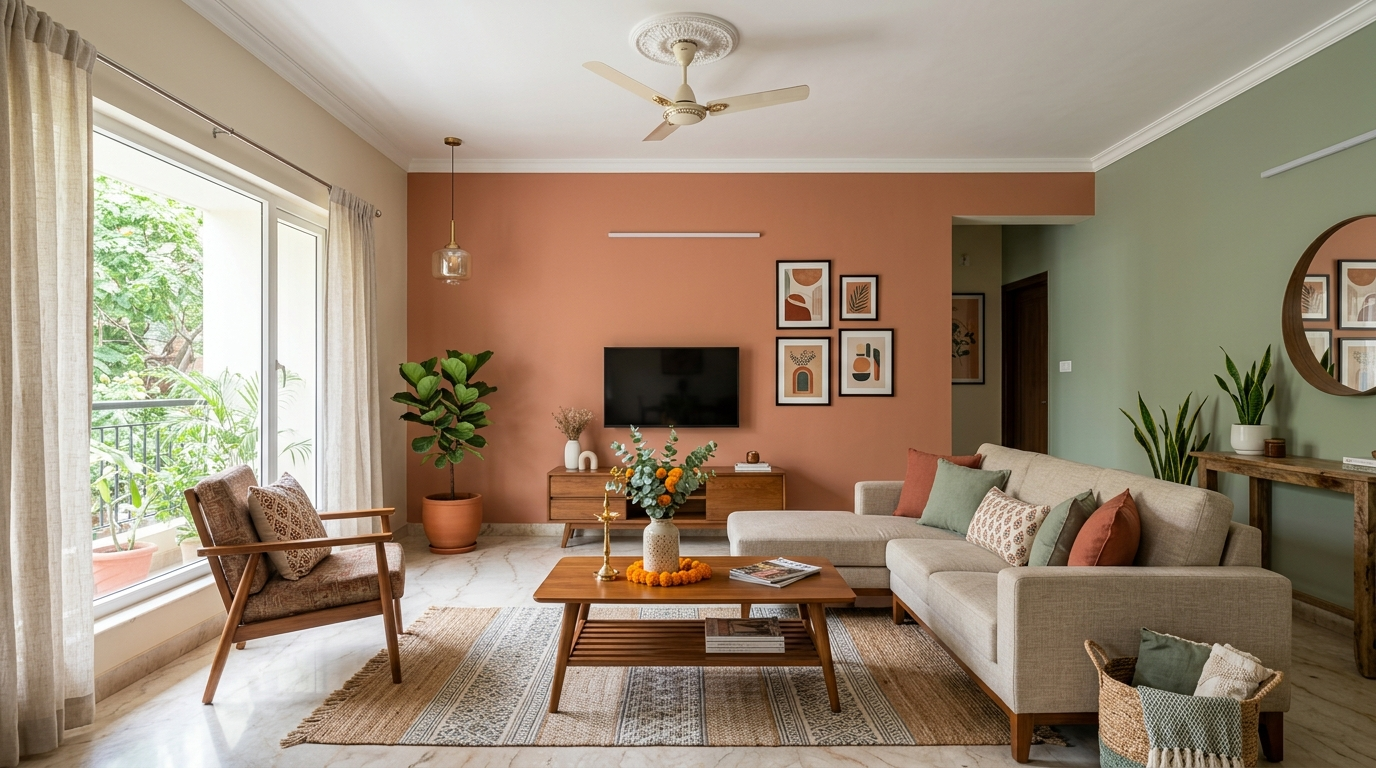
The colour of your walls does more than decorate your home. It changes how a room feels, how light bounces around, and even how relaxed or energetic you feel inside it. A great colour choice can make a small room look bigger, a dim corner feel brighter, and an ordinary home feel calm and beautiful.
But with thousands of paint shades available, choosing the right colour for each room of your home can be overwhelming. This guide breaks down the best paint colors for Indian homes in 2026 — what is trending, what works in our climate, and how to choose with confidence.
Why Paint Colour Choice Matters More Than You Think
Walls are the largest visible surfaces in any room. The colour you put on them affects:
- Mood and energy: Warm shades energise; cool shades calm
- Perceived size: Light colours expand; dark colours create intimacy
- Furniture impact: The right wall colour makes your furniture stand out
- Natural light use: Some colours brighten dim rooms; others soften harsh light
- Daily wellbeing: You see these walls every day for years
Spending a bit more time on colour selection now saves regret and costly repainting later.
Top Paint Colour Trends for Indian Homes in 2026
The colour world has shifted notably in the past few years. Here are the trends that work especially well in Indian homes:
- Warm Earthy Neutrals — Beiges, terracottas, and soft browns are everywhere. They create cosy, sophisticated spaces that work in any climate.
- Muted Greens — Sage green, olive, and forest green bring a calming connection to nature.
- Soft Pastels — Especially pale pinks, soft blues, and muted yellows for bedrooms and kids’ rooms.
- Deep Statement Walls — Navy, charcoal, and dark green accent walls add drama without overwhelming.
- Off-Whites With Personality — Cream, almond, and warm white have replaced stark cool whites in most rooms.
- Two-Tone Walls — Lower section in a deeper shade, upper section lighter, with a clean horizontal divider.
Best Paint Colours for the Living Room
The living room is your home’s main social space. The right colour balances warmth, light, and welcome.
Soft Beige and Cream: Versatile, timeless, and works with any furniture style. Examples: Asian Paints “Almond Cream”, Berger “Off-White Crema”.
Warm Greys: A favourite in modern Indian homes. Pairs beautifully with wooden furniture and adds sophistication without being cold.
Sage Green: A 2026 favourite. Calming, fresh, and works in both compact and larger living rooms.
Terracotta or Rust: For homes with traditional or boho decor. Rich, warm, and visually striking on a feature wall.
Pro tip: If your living room gets little natural light, lean towards lighter shades. If it has plenty of sun, deeper tones work beautifully.
Best Paint Colours for the Bedroom
Bedrooms should feel calming and personal. The colour should help you wind down at the end of the day.
Pale Lavender or Lilac: Soothing and ideal for bedrooms; promotes restful sleep.
Soft Pink or Dusty Rose: Modern, feminine, and surprisingly versatile when paired with wood or grey accents.
Light Blue or Powder Blue: Cool and calming, especially good in warm Indian summers.
Muted Sage or Mint Green: Brings nature in, perfect for bedrooms with views of greenery.
Cream and Warm Off-White: A safe, timeless choice that pairs beautifully with any bed linen.
For master bedrooms, consider painting one wall (the headboard wall) in a deeper accent shade — navy, charcoal, or deep green — for a luxurious focal point.
Best Paint Colours for Kids’ Rooms
Children’s rooms benefit from cheerful but not overwhelming colours.
Pastel Yellow: Sunny and uplifting; works for both boys and girls.
Mint Green: Fresh and gender-neutral.
Soft Coral or Peach: Warm and inviting without being too “pink.”
Sky Blue: Classic but updated when paired with white furniture.
Pale Lavender: Calming and modern.
Avoid: Very bright primary colours covering all four walls. They can be overstimulating. Use them as accents instead.
Best Paint Colours for the Kitchen
Kitchens benefit from clean, fresh colours that handle daily use.
Crisp White: Always classic; makes small kitchens look bigger and brighter.
Soft Yellow: Cheerful and stimulates appetite (genuinely — it is a known psychological effect).
Light Grey: Modern and pairs beautifully with white cabinets.
Pale Blue: Cool, calming, and feels clean.
Muted Green: Especially nice if your kitchen is small or lacks windows.
Always choose washable, oil-resistant paint finishes for kitchens — this matters more than the exact shade.
Best Paint Colours for Bathrooms
Bathrooms are usually compact spaces where the right colour makes them feel larger and fresher.
Pale Aqua or Sea Blue: Spa-like and refreshing.
Crisp White: Always works; makes the room feel clean and bright.
Soft Grey: Modern and pairs beautifully with white fittings.
Light Sage: Gentle and natural.
Use anti-fungal, water-resistant paints in bathrooms regardless of the colour chosen.
Best Paint Colours for Home Exteriors
Exterior colours need to handle Indian weather — heat, humidity, monsoon, and dust.
Off-White or Cream: Timeless, reflects heat, and brightens the entire facade.
Warm Beige: Sophisticated and pairs beautifully with stone or wooden accents.
Light Grey: Modern and elegant; works especially well on contemporary architecture.
Earthy Yellow or Mustard: Traditional Indian homes often use these warm shades.
Light Terracotta: Warm, classic, and ages beautifully.
Pro tip: Keep your trim (windows, railings, doors) in a contrasting colour. White trim on a coloured wall is a timeless combination.
How to Choose the Right Paint Colour Confidently
A few rules make colour selection much easier:
- Test before committing. Buy small sample tins, paint a 2×2 ft patch on the actual wall, and observe over different times of the day. Colours look completely different in morning sun, afternoon glare, and warm evening light.
- Consider your furniture. The wall colour must work with your existing sofa, curtains, and rugs. If you are buying new furniture, pick the wall colour first — it is much harder to find furniture to match a difficult wall colour.
- Pay attention to undertones. Many “neutral” colours have subtle undertones — yellow, pink, blue, or green. Make sure these undertones match the rest of your decor.
- Use the 60-30-10 rule. 60% main colour (walls), 30% secondary (furniture, large items), 10% accent (cushions, art). This creates visual harmony.
- Choose finishes wisely. Matte hides imperfections but is less washable. Satin and semi-gloss are more durable. Glossy finishes show every flaw.
Common Paint Colour Mistakes to Avoid
- Choosing colours from tiny swatches alone: Always test on the actual wall
- Following trends blindly: What looks great on Instagram may not suit your home
- Forgetting the ceiling: A bright white ceiling makes any wall colour pop
- Over-saturated colours everywhere: Use bold colours as accents, not all walls
- Ignoring lighting: A perfect colour in a showroom can look terrible in your home
- Using cheap paint: Higher-quality paint covers better and lasts longer; cheaper paint costs more in the long run
Quality Paint Brands in India
Stick to reputable brands for both interior and exterior painting:
- Asian Paints: Largest paint brand in India; wide colour range and reliable quality
- Berger Paints: Excellent finish quality; known for premium products
- Nerolac: Especially strong in exterior paints
- Dulux (AkzoNobel): International quality standards
- Indigo Paints: Indian brand offering good value
Avoid unknown local brands for major painting projects — the slightly higher cost of branded paint is worth the durability.
Final Thoughts
The best paint colour for your home is one that suits the space, the light, your furniture, and how you want each room to feel. Take time with the decision — wall colour stays with you for years.
At QuickHomeSolution, we connect homeowners with verified, experienced painters across India. Whether you need a single wall refreshed or a complete home repaint, expert advice and professional execution are just a click away.