
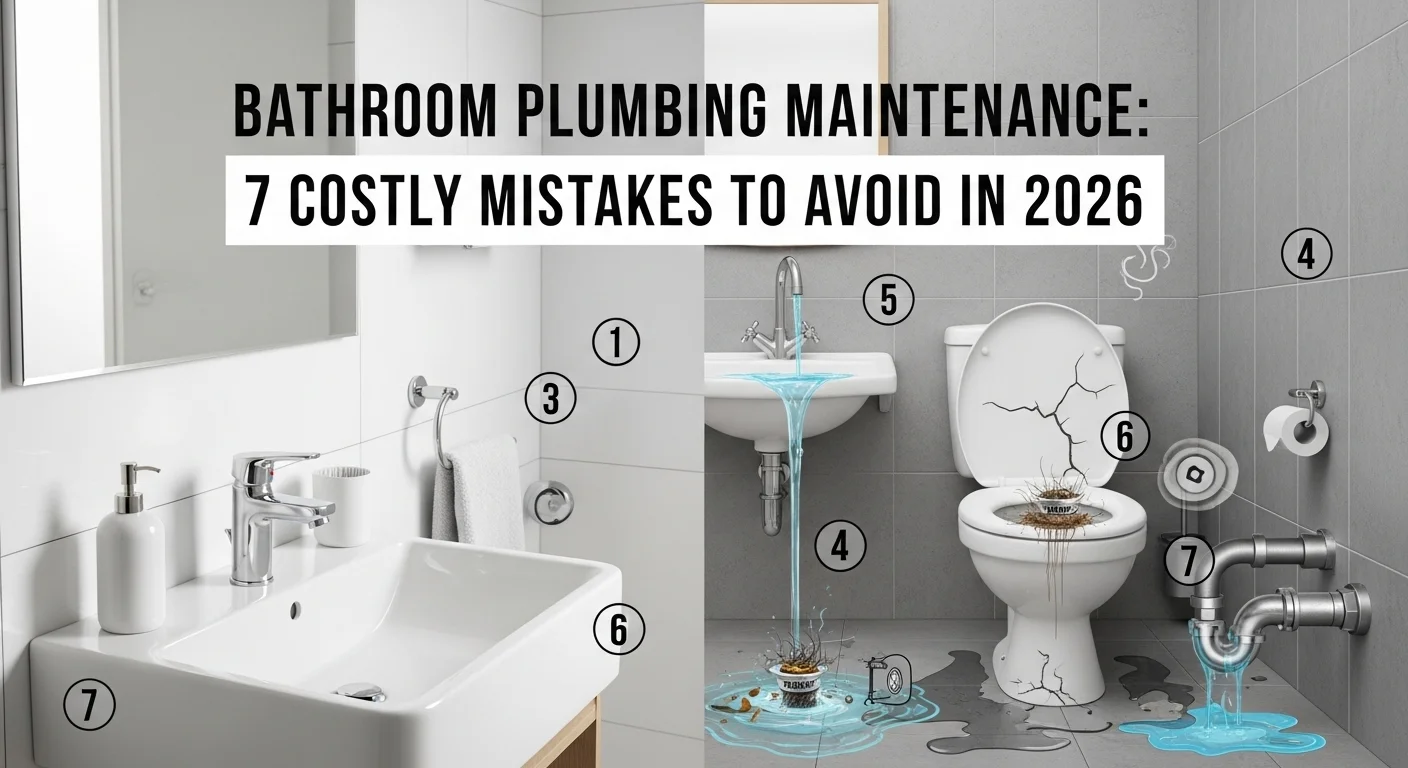
Most people only think about bathroom plumbing when something goes wrong. The tap starts dripping. The drain refuses to flow. The geyser stops heating. By that point, the small problem has often become an expensive one.
Bathroom plumbing maintenance is not about being a plumbing expert. It is about a few simple habits and avoiding a handful of common mistakes that homeowners make again and again. In this guide, we walk you through the seven most costly bathroom plumbing mistakes, explain what they do to your home, and show you the simple ways to avoid them.
Why Bathroom Plumbing Maintenance Is So Important
Of all the rooms in an Indian home, the bathroom takes the most plumbing abuse. Water runs through it dozens of times a day. Hard water deposits build up on every fitting. Hair, soap residue, and small objects find their way into drains. And the high humidity creates perfect conditions for mould and corrosion.
A small leak in your bathroom can:
- Damage tiles, walls, and ceilings of the floor below
- Cause electrical hazards near switches and water heaters
- Lead to mould growth that affects health
- Add hundreds of rupees to your monthly water bill
Regular bathroom plumbing maintenance prevents all of this and adds years of life to every fitting.
Mistake 1: Ignoring Small Leaks
This is the single most expensive mistake homeowners make. A tap that drips once a second can waste over 11,000 litres of water a year. A small leak under a wash basin can rot the cabinet wood within months. A tiny crack in the geyser pipe can cause a wall stain that costs thousands to repair.
The fix: Check every tap, shower, and visible pipe joint once a month. If you see even a slow drip, fix it within a week. Most small leaks need nothing more than a new washer or some plumber’s tape.
Mistake 2: Pouring Hair, Wipes, and Oil Down the Drain
Bathroom drains are not designed for solids. Hair, paper wipes, sanitary products, and oil-based bath products are the leading causes of bathroom drain blockages in India.
The fix: Install a small drain strainer over every drain — they cost less than ₹100 and catch hair before it enters the pipe. Empty the strainer once a week. Never flush wipes or sanitary products down the toilet, even if the packaging says “flushable.”
Mistake 3: Skipping Geyser Maintenance
Most Indian homes use electric geysers, and most of these are never serviced until they break. Sediment from hard water settles inside the tank, reducing heating efficiency, increasing electricity bills, and eventually causing the heating element to fail.
The fix: Drain and flush your geyser tank every six months. Get the heating element and thermostat checked once a year. Always switch off the power before any maintenance, and consider installing a water softener in cities with very hard water like Hyderabad, Bengaluru, and parts of Delhi NCR.
Mistake 4: Using Harsh Chemical Drain Cleaners
When a drain clogs, the first instinct is to pour in a strong chemical cleaner. These products often work in the short term but cause long-term damage. They corrode metal pipes, damage rubber seals, and weaken plastic joints.
The fix: Use natural methods instead. Hot water mixed with baking soda and vinegar handles most clogs. For stubborn blockages, use a drain snake or call a plumber to clear it mechanically. Save the harsh chemicals as a last resort.
Mistake 5: Ignoring Water Pressure Problems
A sudden change in water pressure is rarely random. Low pressure may mean blocked aerators, partially closed valves, or a hidden leak. Very high pressure can damage joints, weaken tiles, and shorten the life of every fitting in your bathroom.
The fix: If you notice a sudden change, investigate within a few days. Check all aerators by unscrewing them and soaking in vinegar. Confirm that all shut-off valves are fully open. If the issue continues, ask a plumber to test the pressure properly. Pressure-reducing valves are inexpensive solutions when supply pressure is too high.
Mistake 6: Not Cleaning the Bathroom Tank and Cistern
The toilet cistern is one of the most ignored parts of any bathroom. Over time, mineral deposits build up inside, causing slow flushes, weird sounds, and component failures.
The fix: Clean the inside of the cistern once every 6 months. Drop in a cistern cleaning tablet or use diluted vinegar, let it sit for an hour, then flush a few times. Check that the flapper, fill valve, and chain all move smoothly. This 20-minute job prevents most major toilet repairs.
Mistake 7: Hiring the First Available Plumber for Major Jobs
When something serious goes wrong — a leak inside the wall, a broken concealed valve, or the need to replace a geyser — many people hire whoever is available fastest. This often leads to poor workmanship and repeat issues.
The fix: For any bathroom plumbing job that costs more than a few thousand rupees, take time to verify the plumber. Check experience with concealed plumbing specifically, ask for previous work photos, and confirm the warranty on parts and labour. Verified platforms like QuickHomeSolution help you find background-checked plumbers with clear reviews.
A Simple Monthly Bathroom Plumbing Checklist
You do not need to be obsessive — just consistent. Spend 15 minutes once a month going through this list:
- Check all taps and showers for drips
- Look under the wash basin for water stains
- Empty drain strainers and clean them
- Test the toilet flush — it should be quick and clean
- Listen for any “whistling” or “humming” pipes
- Look at the wall behind the geyser for damp spots
- Check that floor drains run quickly
This 15-minute monthly habit catches almost every plumbing issue while it is still small and cheap to fix.
Seasonal Bathroom Plumbing Tips
Summer: Inspect for hard water buildup, which is at its worst in dry months. Clean aerators and showerheads.
Monsoon: Check for any signs of water seepage from outside. Clean floor drains regularly. Watch for damp patches.
Winter: Insulate exposed pipes in North India. Flush the geyser before heavy use begins. Keep bathrooms ventilated to reduce mould.
When to Stop DIY and Call a Professional
Some bathroom plumbing problems are not for DIY. Call a plumber immediately if you see:
- Water stains spreading across the wall or ceiling
- Multiple drains backing up at the same time
- A tap or shower with no water at all
- Any leak combined with electrical fittings nearby
- A geyser making popping or knocking sounds
These are warning signs that something deeper has gone wrong, and waiting almost always makes it worse.
Final Thoughts
Bathroom plumbing maintenance is not glamorous, but it is one of the most rewarding kinds of home care. A few simple habits, a 15-minute monthly check, and good professional help when needed will keep your bathroom running smoothly for years.
At QuickHomeSolution, we connect you with verified, experienced plumbers across India who handle everything from small leak fixes to complete bathroom renovations. Maintain smartly, fix early, and your bathroom will reward you with decades of trouble-free service.