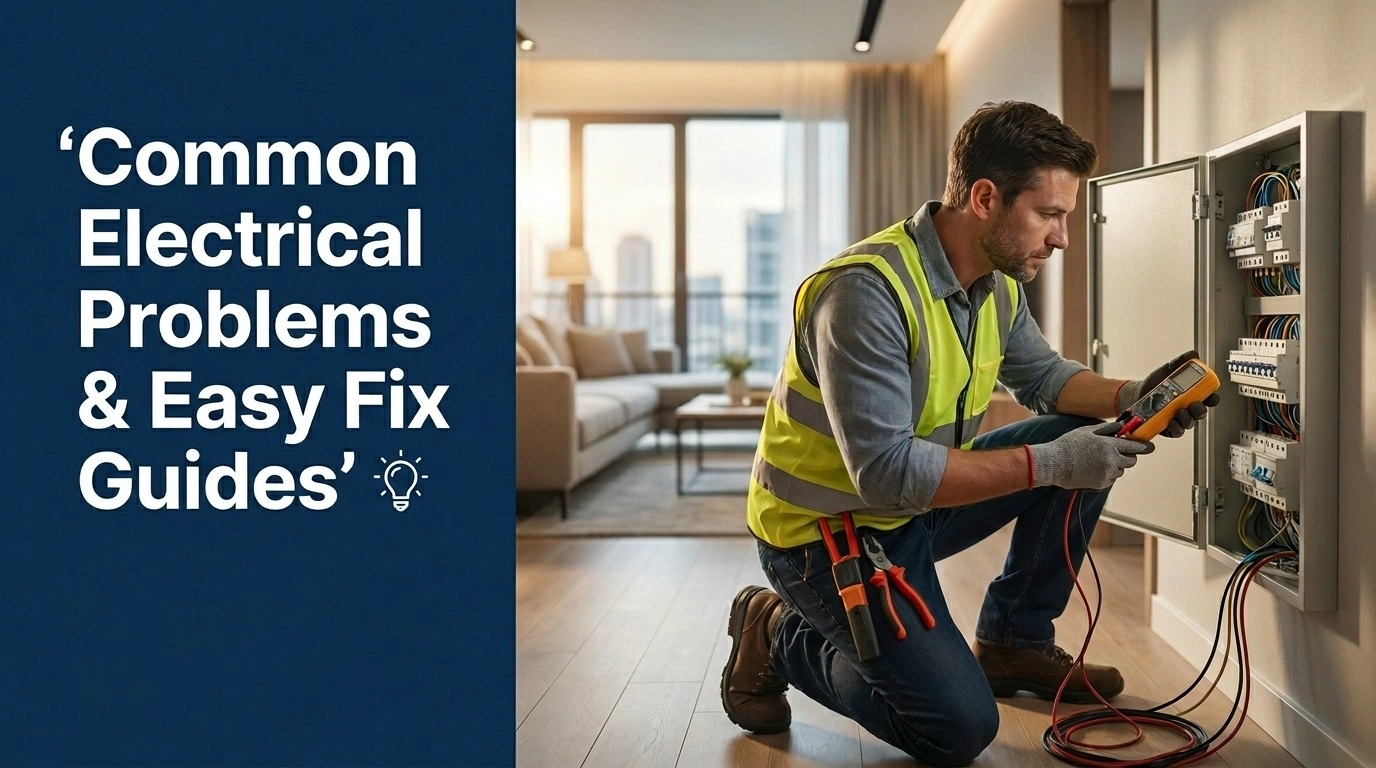
Electrical problems are not like plumbing problems. A leaking tap is annoying. A faulty wire can be dangerous. That is why every homeowner should understand the most common electrical problems, even if they never plan to fix them personally.
This guide walks you through the ten most frequent electrical issues in us homes, what causes them, what you can safely check yourself, and exactly when to step back and call a qualified electrician.
A Word Before We Begin
Electricity is forgiving until it is not. Many electrical issues seem small at first — a flickering light, a warm switch, a tripping breaker — but they can be the warning signs of something serious. Always switch off the main supply before opening any switchboard or fitting, and never improvise. If you are unsure, calling a professional is always cheaper than fixing the damage from a mistake.
1. Frequent Power Surges
Power surges are sudden spikes in voltage that can damage every electronic device in your home — TVs, refrigerators, ACs, and laptops alike.
Causes: Lightning strikes, faulty appliances, damaged power lines, or transformer issues from the grid.
What to do: Install good-quality surge protectors at main appliance points. Unplug sensitive electronics during thunderstorms. If surges are frequent, ask an electrician to check your earthing and inspect the main MCB.
2. Frequent Circuit Breaker Tripping
You switch on the iron, and the lights go out. The MCB has tripped again.
Causes: Circuit overload (too many appliances on one line), short circuits, or faulty wiring inside walls.
What to do: First, identify which circuit is tripping and how often. If it trips only when a specific appliance is on, the appliance is the issue. If it trips at random, the wiring or the breaker itself may need attention. Frequent tripping is the breaker doing its job, but the cause must be found and fixed.
3. Flickering or Dimming Lights
Lights that flicker every now and then might just need a tighter bulb. Lights that flicker often or dim suddenly are a sign of something deeper.
Causes: Loose bulb, faulty switch, voltage fluctuation from the supply, overloaded circuits, or worn-out wiring.
What to do: Tighten the bulb first. If the issue continues, change the switch or the bulb. If lights dim only when a heavy appliance switches on, your circuit may be overloaded — an electrician can rebalance it. If many lights flicker together, the issue is in the main supply or panel.
4. Hot Switches and Outlets
A switchboard or socket should never be warm to the touch. If yours is, treat it as urgent.
Causes: Loose wiring inside the switch, overloaded sockets, or use of low-quality fittings.
What to do: Stop using the socket immediately. Switch off the corresponding circuit at the MCB. Call an electrician — this is one of the most common warning signs of an electrical fire and must not be ignored.
5. Burning Smell or Sparks
A burning plastic smell near any switchboard, plug, or appliance is one of the most serious electrical warnings you can get.
Causes: Melting insulation, an arcing wire, or a failing component.
What to do: Switch off the main supply at once. Do not touch the affected area. Move people and pets away. Call a qualified electrician immediately. Never try to “let it air out” — the underlying issue does not go away on its own.
6. Dead Outlets
A socket that suddenly stops working is one of the most common electrical problems homeowners face.
Causes: Tripped breaker, blown fuse, loose wiring inside the socket, or a damaged outlet.
What to do: First, check the corresponding MCB and reset it if needed. Test the outlet with a different appliance. If still dead, an electrician will need to open the outlet and check the wiring. Do not poke metal objects into a “dead” socket — the wiring may still be live.
7. High Electricity Bills
If your bill suddenly jumps without any change in usage, electricity is leaking somewhere.
Causes: Old or faulty appliances, hidden current leaks (earth leakage), inefficient bulbs, or unauthorised connections.
What to do: Switch off all appliances and check the meter — if it still spins, you have a leak. Replace incandescent and CFL bulbs with LEDs. Get an electrician to test for current leakage with a clamp meter. Long-running geysers and old refrigerators are common culprits.
8. Buzzing or Humming Sounds
Electricity should be silent. If your switchboard, fan, or fluorescent fitting hums or buzzes, something is wrong.
Causes: Loose wiring, an aging dimmer switch, or a failing fan capacitor.
What to do: A buzzing wall switch needs to be replaced — usually a quick job. Humming fans often need a new capacitor (₹100-200 part). A buzzing main panel is more serious and needs immediate professional attention.
9. Tripping RCCB or ELCB
Modern homes often have an RCCB (Residual Current Circuit Breaker) or ELCB (Earth Leakage Circuit Breaker). When it trips, it is detecting a current leak that could harm someone.
Causes: Damp walls, water near sockets, faulty appliance earthing, or insulation breakdown in old wiring.
What to do: Disconnect all appliances and reset the RCCB. Plug them in one by one to find the faulty one. If the RCCB trips even with everything unplugged, the wiring itself has a leak — call an electrician immediately. Never bypass the RCCB.
10. Old Wiring and Outdated Switchboards
Many homes in us still use aluminium wiring or 30-year-old switchboards. These were perfectly fine in their time, but modern usage exceeds what they can handle.
Causes: Higher load from ACs, geysers, microwaves, and electronics that did not exist when the home was wired.
What to do: If your home is more than 25 years old and has never had a rewiring, schedule an electrical inspection. Modern copper wiring with proper earthing, MCBs, and RCCBs is much safer and saves on bills in the long run.
Simple Habits That Prevent Most Electrical Problems
Many of these problems can be prevented with a few small habits:
- Switch off appliances at the socket, not just the remote
- Do not run extension cords through doorways or under carpets
- Replace damaged plugs immediately, not when convenient
- Never use sockets with wet hands
- Annual electrical inspection in homes older than 10 years
Signs You Should Stop and Call an Electrician
Even seasoned DIY enthusiasts should not touch electrical work in these situations:
- Burning smell or visible sparks
- Hot or discoloured switchboards
- Frequent tripping despite no obvious cause
- Mild shocks when touching appliances
- Buzzing from the main electrical panel
These are not “wait and see” problems. Electrical fires are the leading cause of home fire deaths in many parts of us, and most start with these warning signs.
Final Thoughts
Common electrical problems are usually solvable with the right approach — and the most important part of that approach is knowing what is safe to fix yourself and what needs a qualified electrician. Switch off, observe, and never assume.
At QuickHomeSolution, we connect homeowners with verified, licensed electricians who diagnose properly, charge fairly, and explain what they are doing every step of the way. Your home’s electrical system is one of its most important systems — give it the care it deserves