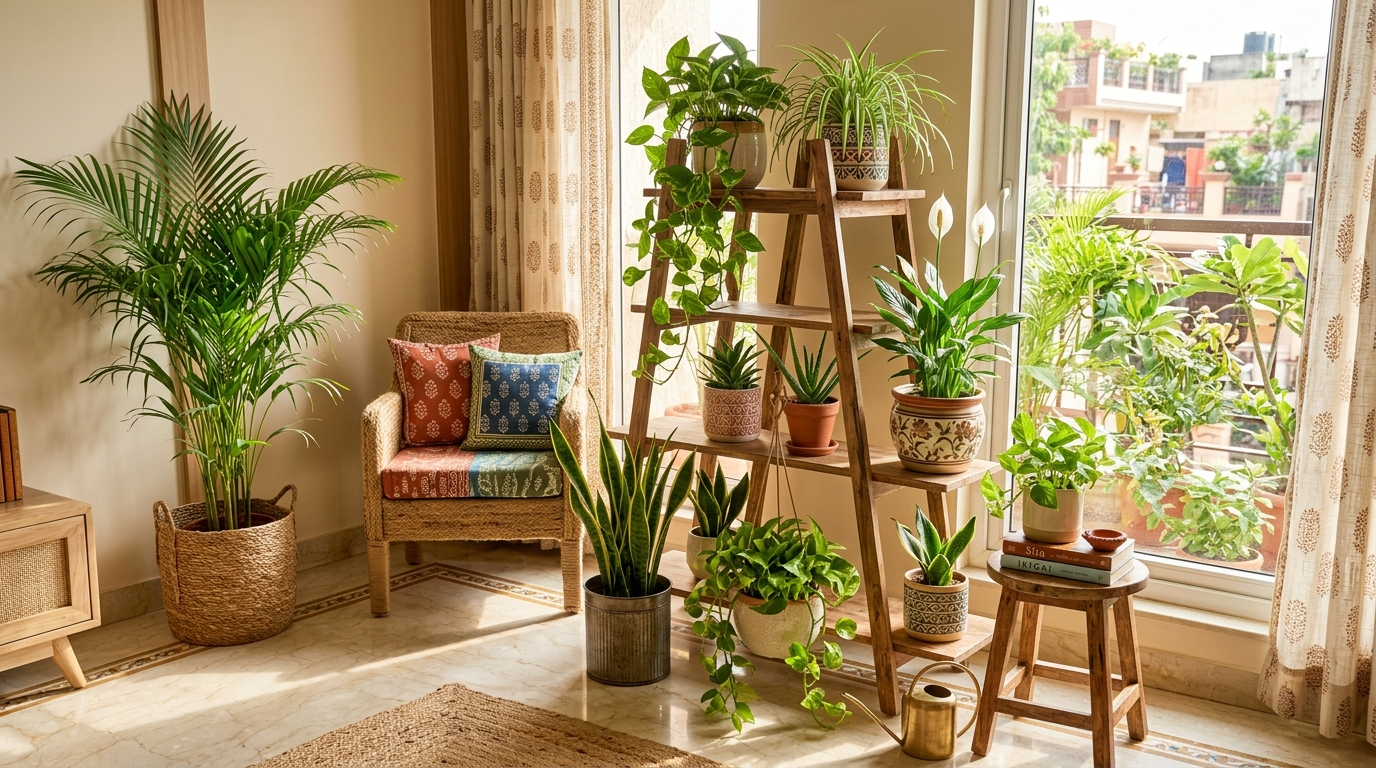
Indoor plants do something quietly magical to a home. A bare corner becomes inviting. A boring shelf turns into a small green stage. Even people who insist they have a “black thumb” usually find that with the right plants, they can keep something alive — and even thriving.
The good news for Indian homes is that our climate suits a huge variety of indoor plants. The challenge is choosing ones that match your light, your time, and your lifestyle. This guide highlights twelve of the best indoor plants for Indian homes, all selected for ease of care, beauty, and benefits like air purification.
Why Indoor Plants Are Worth It
Indoor plants are not just decoration. They actively make your home better:
- Cleaner air: Many houseplants filter common indoor pollutants
- Better humidity: Especially valuable in dry winter months in North India
- Improved mood: Greenery genuinely reduces stress and boosts focus
- Stronger decor: A well-placed plant ties an entire room together
- Connection to nature: Especially valuable for apartment dwellers
The right indoor plant can give years of beauty in return for a few minutes of care each week.
What to Consider Before Buying Indoor Plants
Before choosing any plant, honestly assess:
- Light: Is your home bright, medium, or dim?
- Time: How often will you actually water and care for it?
- Pets and kids: Some plants are toxic if chewed
- Size: Match the plant size to the space
- Climate: Coastal humidity, dry desert heat, or temperate?
A plant that does not match your conditions will struggle no matter how much you love it.
1. Snake Plant (Sansevieria)
If you want a plant that can survive almost anything, this is the one. Snake plants tolerate low light, irregular watering, and dry indoor air with grace.
Light: Low to bright indirect Water: Once every 1-2 weeks; less in winter Special note: Considered one of the best air-purifying plants by NASA studies. Releases oxygen at night, making it ideal for bedrooms.
2. Money Plant (Pothos)
The classic Indian indoor plant for good reason. Money plant grows quickly, looks lush, and survives in conditions where most other plants give up.
Light: Low to medium; even tolerates indirect sunlight Water: Once a week; more in summer Special note: Can grow in plain water without soil, perfect for kitchens and bathrooms.
3. Peace Lily (Spathiphyllum)
Few indoor plants give as much beauty for so little effort. Peace lilies have lush green leaves and produce elegant white flowers when content.
Light: Medium indirect; flowers more in brighter spots Water: Keep soil moist; the leaves droop dramatically when thirsty (a useful warning) Special note: Excellent at filtering common indoor pollutants. Mildly toxic to pets if eaten.
4. Aloe Vera
Beautiful, useful, and almost indestructible. The clear gel inside the leaves soothes burns and skin irritations.
Light: Bright, with some direct sun Water: Every 2-3 weeks; less is better than more Special note: Great for kitchens where you can break a leaf for instant first aid.
5. Spider Plant (Chlorophytum)
The spider plant produces cute baby plants on long stems, which dangle gracefully and can be propagated easily.
Light: Bright indirect to medium light Water: Once a week; tolerates occasional drying out Special note: Safe for pets and one of the easiest plants to share with friends.
6. ZZ Plant (Zamioculcas zamiifolia)
If you travel often or forget to water plants, the ZZ plant is your best friend. Its waxy leaves store water, allowing it to handle weeks of neglect.
Light: Low to bright indirect (avoid harsh direct sun) Water: Every 2-3 weeks Special note: Slow-growing but extremely durable. A long-term low-maintenance option.
7. Rubber Plant (Ficus elastica)
A statement plant with glossy, deep green leaves that can grow into a small tree over time. Adds a sophisticated, modern look to any room.
Light: Bright indirect Water: Once a week, allowing top soil to dry between waterings Special note: Wipe leaves with a damp cloth occasionally to keep them shiny and dust-free.
8. Areca Palm
A graceful palm that brings tropical elegance to any room. Areca palms can grow quite large and serve as natural humidifiers.
Light: Bright indirect Water: Keep soil consistently moist but not soggy Special note: Excellent for dry indoor air. Pet-safe and child-safe.
9. Boston Fern
A bushy, lush fern that loves humid bathrooms or balconies with morning light. The cascading fronds make it perfect for hanging baskets.
Light: Bright indirect, no direct sun Water: Likes humidity; mist regularly or place in a bathroom Special note: Drops leaves when too dry. Move to a more humid location if needed.
10. Tulsi (Holy Basil)
Sacred in Indian culture, useful in cooking and tea, and beautiful in any home. Many Indian families keep tulsi at home not just for tradition but for daily benefits.
Light: Bright; needs at least 4-6 hours of direct sun (best on a balcony or near a sunny window) Water: Daily in summer, every 2-3 days in winter Special note: Pluck leaves regularly to encourage bushier growth.
11. Jade Plant (Crassula ovata)
A beautiful succulent considered to bring good luck and prosperity. Slow-growing and very long-lived — many jade plants outlive their original owners.
Light: Bright, with some direct sun Water: Every 2-3 weeks; let soil dry completely between waterings Special note: Easy to propagate from leaf cuttings.
12. Lucky Bamboo
Not actually a bamboo, but a hardy plant that grows in water or soil. Common in Indian homes for its symbolism of good fortune.
Light: Medium indirect light; avoid direct sun Water: If grown in water, change weekly; in soil, keep slightly moist Special note: Available in different shapes (twists, spirals, layered arrangements) — great gift plants.
Indoor Plant Care Tips for Indian Homes
Even the best indoor plants need a little attention. These tips will help you keep them healthy:
Watering:
- Check soil before watering; do not water on a fixed schedule
- Use room-temperature water, not cold water straight from the fridge
- Reduce watering in winter when growth slows
Light:
- Rotate pots every 2-4 weeks for even growth
- Move plants away from harsh midday sun
- During monsoon’s cloudy days, move plants closer to windows
Cleaning:
- Wipe leaves monthly with a damp cloth (or rinse smaller plants in the shower)
- Dust on leaves blocks light and reduces growth
- Remove yellow or dead leaves promptly
Feeding:
- Most indoor plants need feeding only every 4-6 weeks
- Use diluted liquid fertiliser; avoid feeding in winter
- Occasionally top up the soil with fresh potting mix
Pest control:
- Watch for sticky residue, white powdery patches, or tiny webs
- Treat early with neem oil spray or diluted soap water
- Isolate any infected plant immediately
Common Indoor Plant Mistakes to Avoid
- Overwatering: The most common cause of indoor plant death
- Pots without drainage: Decorative ceramic pots without holes lead to root rot
- Wrong light placement: Sun-loving plants in dark corners; shade-lovers in harsh sun
- Ignoring repotting: Plants outgrow pots; repot every 1-2 years
- Buying too many at once: Start with 2-3 plants, master them, then expand
Final Thoughts
The best indoor plants for Indian homes are not necessarily the rarest or most exotic — they are the ones that fit your home, your light, and your lifestyle. Start with one or two from this list, learn their needs, and grow your green family slowly.
At QuickHomeSolution, we connect homeowners with verified gardening services across India. Whether you need help setting up an indoor garden, troubleshooting unhappy plants, or designing a fully styled green space, the right help is just a click away.