
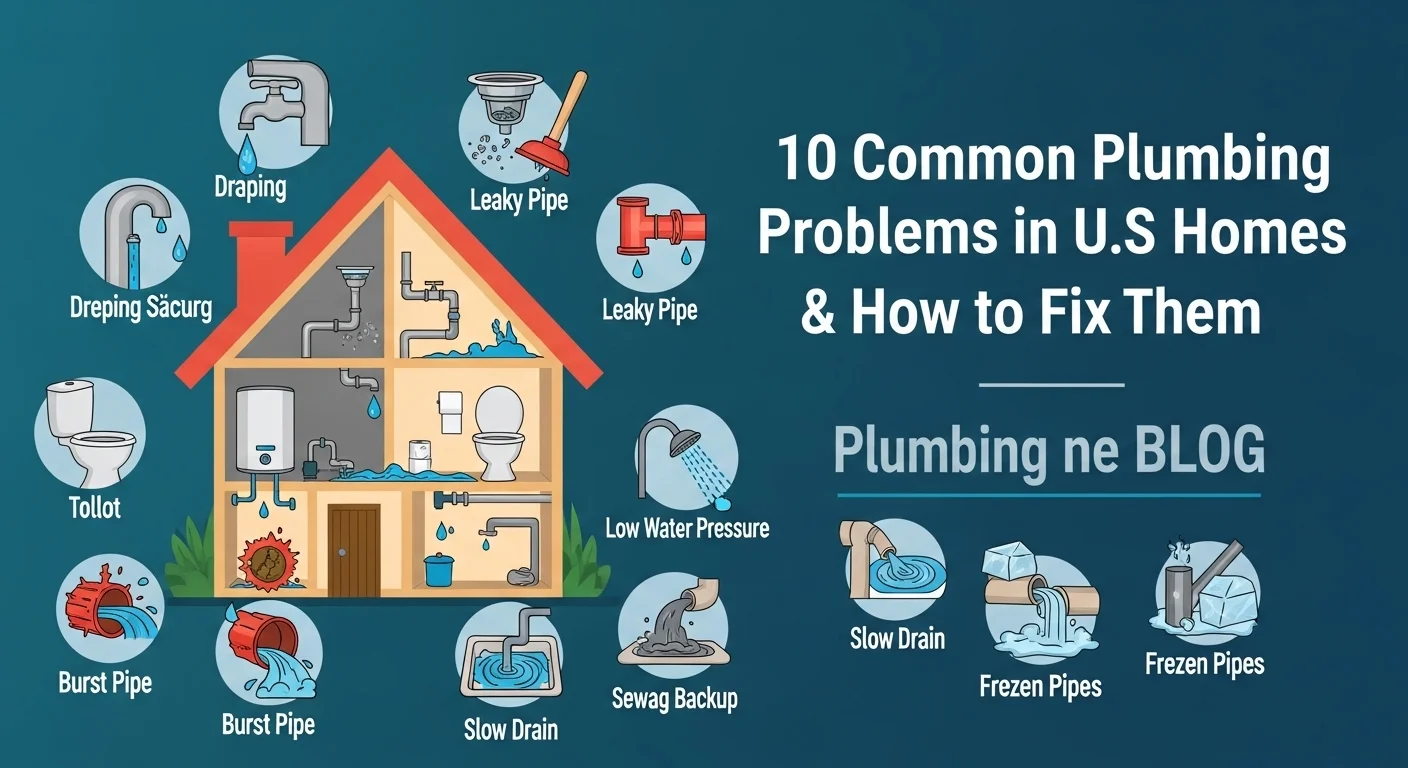
Plumbing problems have a strange way of showing up at the worst possible moment. A leaking tap on a Monday morning. A blocked drain right before guests arrive. A running toilet that quietly doubles your water bill. If you live in an Us home, you have probably faced at least three of these issues already.
The good news is that most common plumbing problems are not as scary as they look. With a little know-how, you can fix many of them yourself, and for the rest, you will at least know what to tell the plumber. In this guide, we walk through the ten most common plumbing problems in Us homes, why they happen, and exactly how to handle them.
1. Leaking Taps and Faucets
A dripping tap is the most common plumbing problem in Us, and it wastes far more water than people realise. A single tap dripping once per second can waste over 11,000 litres of water a year.
Why it happens: Worn-out rubber washers, damaged O-rings, or a corroded valve seat are usually the culprits. Hard water in cities like Delhi, Jaipur, and Hyderabad speeds up this damage.
How to fix it: Turn off the water supply, unscrew the tap handle, and replace the washer or cartridge. Replacement washers cost less than ₹50 at any local hardware store. If the tap is more than 10 years old, consider replacing the entire fixture.
2. Low Water Pressure
You turn on the shower and get a sad trickle instead of a steady stream. Low water pressure is especially common in apartments and older buildings.
Why it happens: Mineral deposits in the aerator, partially closed shut-off valves, leaks in the pipe network, or simply low pressure from the municipal supply.
How to fix it: First, unscrew the aerator at the tip of your tap and soak it in vinegar overnight to dissolve mineral buildup. Check that all shut-off valves are fully open. If the problem is building-wide, a pressure-boosting pump may be the answer.
3. Clogged Drains in Sinks and Showers
A sink that drains slowly is annoying. One that does not drain at all is a small emergency.
Why it happens: In kitchen sinks, oil and food particles are the main villains. In bathrooms, hair and soap scum form solid clogs over time.
How to fix it: Skip the harsh chemical drain cleaners — they damage pipes. Instead, pour half a cup of baking soda followed by half a cup of vinegar down the drain, wait 15 minutes, then flush with hot water. For tougher clogs, use a drain snake or a simple bent wire hanger.
4. Running Toilets
If you can hear your toilet running long after you flush, it is silently inflating your water bill.
Why it happens: A faulty flapper valve, a misaligned float, or a broken fill tube inside the cistern.
How to fix it: Lift the cistern lid and watch the mechanism. Most issues come down to a worn flapper that no longer seals properly. A new flapper costs around ₹150-300 and takes ten minutes to replace.
5. Burst or Leaking Pipes
This is one plumbing problem you cannot ignore. A burst pipe can damage walls, ceilings, and electrical wiring within hours.
Why it happens: In North Us, freezing temperatures can crack pipes. In coastal areas, salt corrosion is the main cause. Old galvanised iron pipes are especially prone to bursting.
How to fix it: Immediately turn off the main water supply to your home. Use plumbing tape or a pipe clamp as a temporary seal, then call a licensed plumber. This is not a DIY job for permanent repair.
6. Water Heater (Geyser) Problems
Cold showers in winter are nobody’s idea of fun. Geyser issues are among the most common plumbing problems in Us homes during the cold months.
Why it happens: Sediment buildup in the tank, a faulty thermostat, broken heating element, or a malfunctioning anode rod.
How to fix it: Drain and flush your geyser once every six months to remove sediment. If the water is not heating at all, check the thermostat setting first. For electrical issues, always call a qualified technician.
7. Blocked Toilet
There is no panic quite like the panic of a toilet that will not flush properly.
Why it happens: Too much toilet paper, foreign objects, or a deeper blockage in the soil pipe.
How to fix it: A good plunger handles 90% of toilet clogs. Use it with a steady up-and-down motion, ensuring the rubber cup creates a tight seal. If plunging fails, a toilet auger is the next step. Avoid flushing repeatedly — that is how bathrooms flood.
8. Smelly Drains
When your bathroom or kitchen sink starts smelling like a swamp, it is a sign that something is rotting in the pipes.
Why it happens: Trapped food debris, dried-out P-traps that allow sewer gas to rise, or biofilm buildup inside the drain.
How to fix it: Run hot water through the drain daily for a week. Pour a mixture of baking soda, lemon juice, and salt down the pipe weekly. If the smell persists, the P-trap may need to be cleaned by removing it from underneath the sink.
9. Water Tank Issues
Most Us homes rely on overhead water tanks, and these come with their own set of problems.
Why it happens: Algae growth, tank leaks, faulty ball valves, and dirty water due to lack of cleaning.
How to fix it: Clean your overhead tank at least twice a year. Check the ball valve mechanism — a stuck float causes overflow, while a damaged one prevents filling. Use mosquito-proof tank covers to maintain water hygiene.
10. Pipe Condensation and Sweating
Pipes that are wet on the outside even when there is no leak can cause damp patches on walls and ceilings.
Why it happens: Cold water inside pipes meets warm humid air outside, creating condensation. This is very common during the monsoon and in coastal cities like Mumbai and Chennai.
How to fix it: Insulate exposed pipes with foam pipe wraps. They cost very little and solve the problem permanently. Improving ventilation in bathrooms and kitchens also helps.
When Should You Call a Professional Plumber?
While many of these common plumbing problems can be solved at home, some situations need an expert. Call a plumber immediately if you notice:
- Water stains spreading on walls or ceilings
- A sudden drop in water pressure across the entire house
- Sewage backup in any drain
- A sharp spike in your water bill with no clear reason
- Any electrical fixtures near water leaks
Final Thoughts
The secret to avoiding most plumbing problems is regular maintenance. Check your taps and toilets every few months. Clean the drains. Service the geyser before winter. These small habits save you thousands of rupees and a lot of stress.
At QuickHomeSolution, we connect homeowners across Us with verified, experienced plumbers who fix it right the first time. Whether it is a small leak or a major repair, you do not have to figure it out alone — help is just a click away.