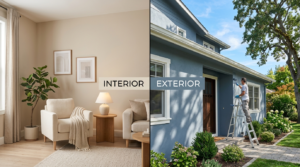
Interior vs Exterior Paint: Key Differences Explained

Walk into any paint shop in India and you’ll see two clearly separated sections — interior paints on one side, exterior paints on the other. To most homeowners, this looks like a marketing trick. Paint is paint, right? You just need a colour and a brush.

Wrong. The difference between interior vs exterior paint is bigger than most people think. Use the wrong one and you’ll see your money peel off the wall within a year. This guide explains exactly what separates the two, where each one belongs, and how to pick the right product without overpaying or compromising.

Why the Distinction Actually Matters

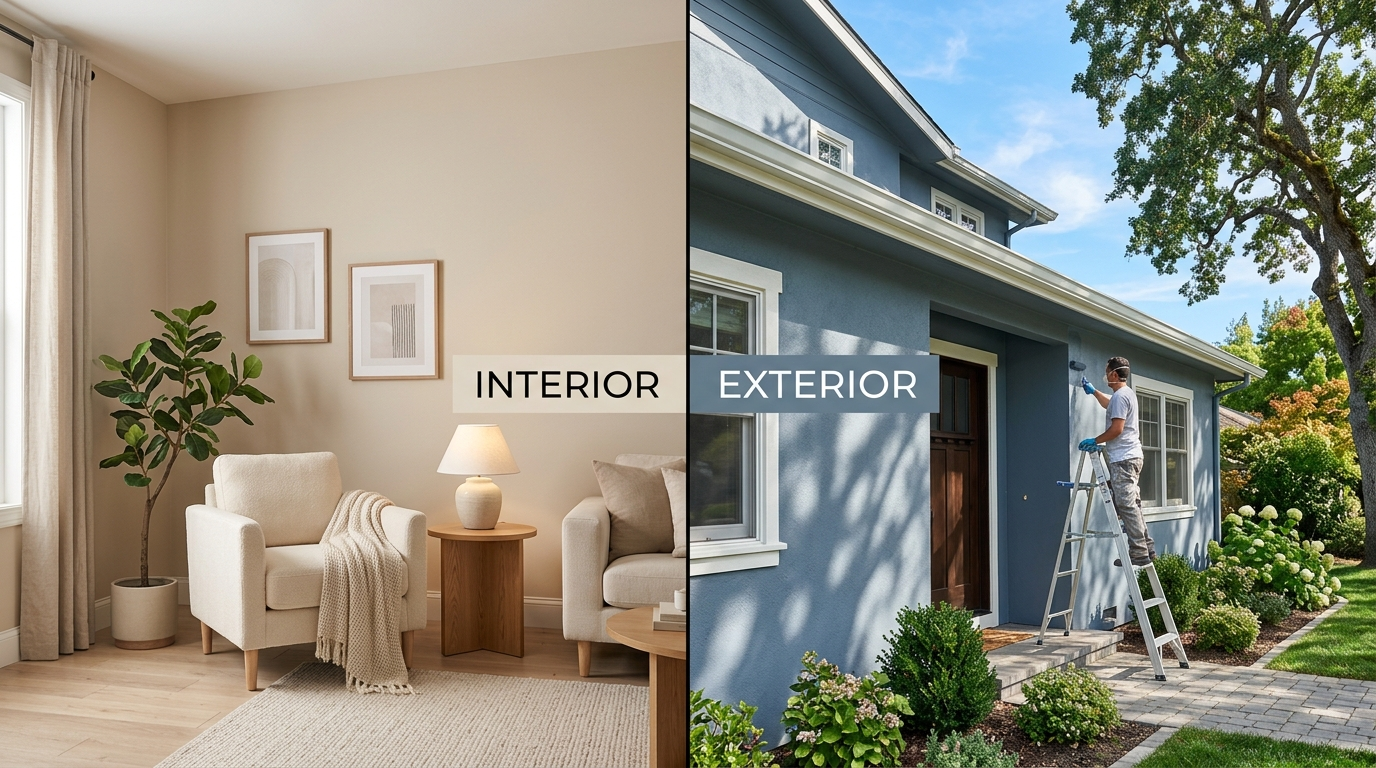
Interior walls and exterior walls live in completely different worlds. Your living room wall sees stable temperatures, no rain, no direct sunlight, and minimal humidity changes. The outside wall of the same house faces 45°C summers, monsoon downpours, UV radiation, dust, pollution, and sometimes freezing nights in North India.

Paint manufacturers design two completely different formulas to handle these two environments. When you ignore the distinction, you either get poor durability outdoors or poor air quality and finish indoors.

How Interior and Exterior Paints Are Made Differently

The base ingredients in both paints are similar — pigments, binders, solvents, and additives. But the proportions and chemistry vary significantly.

Exterior paints contain higher levels of binders that resist UV degradation, more flexible resins that expand and contract with temperature changes, and additives that fight mildew, algae, and fungal growth. They also include water-repellent compounds to handle monsoon moisture.

Interior paints prioritise smooth finish, washability, low odour, and low VOC (volatile organic compounds) emissions for indoor air quality. They don’t need to fight UV or rain, so manufacturers can use softer, more decorative formulas that look better up close.

Durability and Lifespan

A quality interior paint, properly applied on a clean wall, can last 7 to 10 years before needing a refresh. It only fades from cleaning, sunlight through windows, or scuffs.

Exterior paint has a tougher life. Even premium exterior emulsions like Apex Ultima or Royale Shyne Pearl typically last 5 to 8 years in Indian conditions. Cheaper exterior paints start showing chalking, fading, or peeling within 2 to 3 years, especially on south-facing walls that take direct afternoon sun.

If you use interior paint on an exterior wall to save money, expect visible damage within one monsoon season.

Finish and Aesthetics

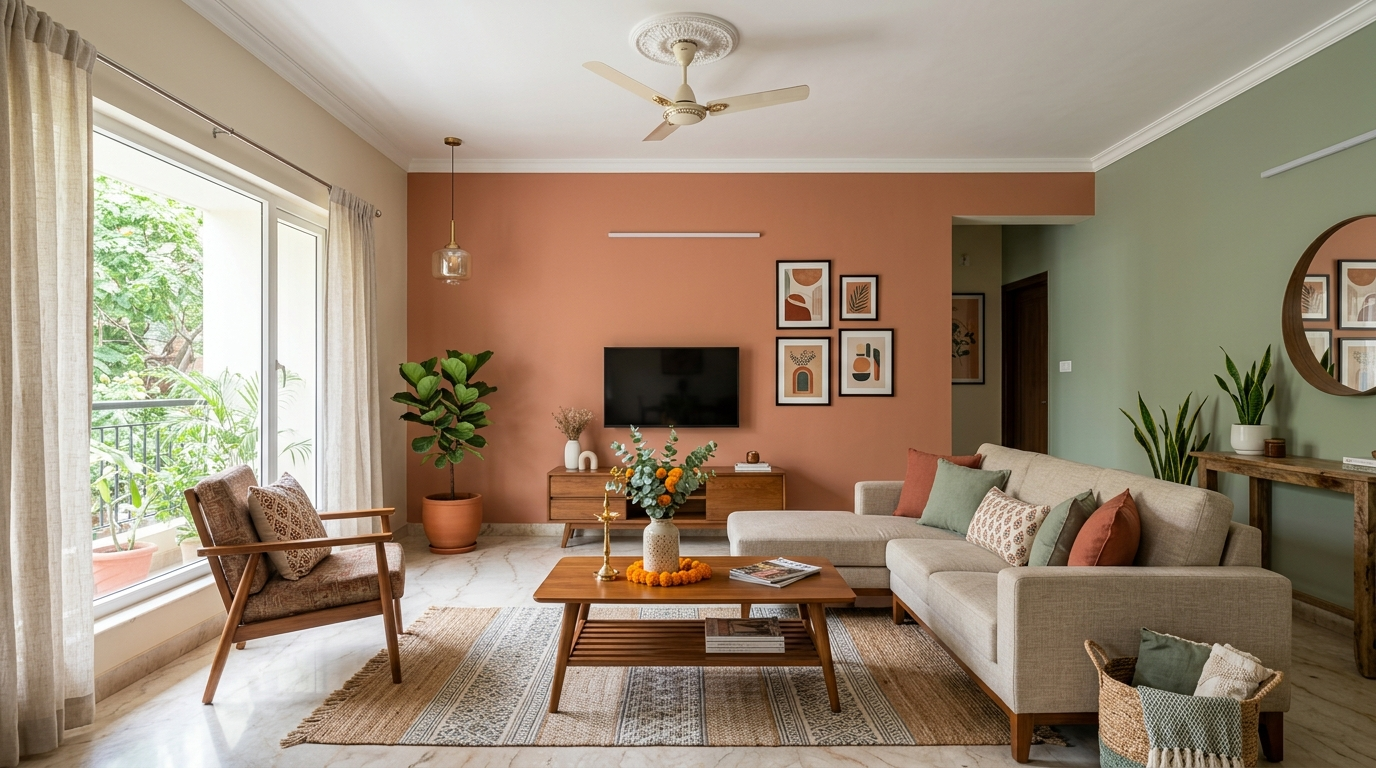
Interior paints come in many finishes — matte, eggshell, satin, semi-gloss, and gloss. Matte finishes hide wall imperfections and give a sophisticated look popular in living rooms and bedrooms. Eggshell and satin are more common in kitchens and bathrooms because they’re easier to wipe clean.

Exterior paints typically come in matte, satin, or textured finishes. Glossy exterior paints are rare because they highlight every imperfection on rough exterior walls and reflect harsh sunlight unflatteringly. Texture paints are popular in India for adding character to compound walls and front facades.

Resistance to Weather and Environment

This is the single biggest practical difference.

Exterior paints in India must handle heavy rain, intense UV, dust storms, and temperature swings. They’re designed to be hydrophobic — water beads up and rolls off rather than soaking in. They also have anti-fungal additives because Indian humidity quickly grows algae and mildew on shaded exterior walls.

Interior paints have none of these properties. Apply them outside and within months you’ll see fungal stains, water seepage marks, fading colour, and peeling along the edges. The binder simply isn’t built to survive outdoors.

Washability and Stain Resistance

Interior paints — especially in kitchens, hallways, and children’s rooms — need to handle wiping, scrubbing, and accidental marks. Premium interior emulsions like Asian Paints Royale Luxury or Berger Silk Glamor are highly washable, allowing you to clean fingerprints, oil splatter, or crayon marks without damaging the finish.

Exterior paints aren’t designed for repeated wiping because they’re meant to self-clean through rainfall. Trying to scrub an exterior paint with a wet cloth can sometimes leave streaks or remove the protective topcoat.

Cost Differences

In India, expect to pay roughly the following for premium products:

  • Interior emulsion (premium): ₹350 to ₹500 per litre
  • Exterior emulsion (premium): ₹450 to ₹650 per litre
  • Texture exterior paint: ₹70 to ₹150 per square foot applied

Exterior paint costs more because of the heavier-duty formula. But it also lasts longer outside and saves you from frequent repainting.

VOC and Indoor Air Quality

This is critical for interior paints. Older oil-based paints released high levels of VOCs — chemicals that cause headaches, breathing issues, and that “fresh paint smell” that lingers for weeks. Modern interior emulsions are mostly water-based and low-VOC, making them safer for bedrooms and homes with children, elderly people, or asthma patients.

Exterior paints often contain higher VOCs because they need stronger chemicals to resist weather. These dissipate quickly outdoors but would be unhealthy indoors. Never use exterior paint inside your home.

Application Surfaces

Interior paint works best on smooth plastered walls, gypsum board, wooden surfaces with primer, and ceilings. It bonds well to indoor surfaces and gives an even finish.

Exterior paint is formulated for cement plaster, concrete, brickwork, and exterior wood. It penetrates deeper into porous surfaces and forms a stronger bond against weathering.

Can You Use Exterior Paint Indoors?

Technically yes, but it’s a bad idea. Exterior paint indoors causes:

  • Strong chemical odour that lingers for weeks
  • Higher VOC exposure in enclosed spaces
  • Rougher finish that doesn’t look as elegant
  • Wasted money since exterior properties are useless inside

The reverse — interior paint outdoors — is even worse and will fail within months.

How to Choose the Right Paint for Each Area

For interiors, prioritise washability, low VOC, and finish quality. Match the finish to the room — matte for living rooms and bedrooms, satin or eggshell for kitchens and bathrooms.

For exteriors, prioritise weather resistance, anti-fungal properties, and UV stability. Premium exterior paints with 5+ year warranties are worth the cost for main facades. Compound walls and side walls can use mid-range options.

Common Mistakes Homeowners Make

The biggest mistake is buying based on colour alone without checking whether it’s an interior or exterior product. Always check the can label.

Other common errors include skipping primer (causing peeling), painting over damp walls during monsoon, using cheap exterior paint on south-facing walls that get harsh sun, and using glossy interior paint in dimly lit rooms where it highlights every imperfection.

Final Thoughts

Interior vs exterior paint isn’t a marketing gimmick — it’s a real engineering distinction. Using the right type protects your investment, extends repaint cycles, and keeps your home looking fresh for years.

When in doubt, ask a professional painter to assess your walls and recommend the right product. At QuickHomeSolution, we connect homeowners across India with verified painters who use the right paint for the right surface and won’t cut corners. Whether you’re refreshing one room or repainting your entire house, the right choice starts with understanding what each paint is designed to do.

Leave a Comment